
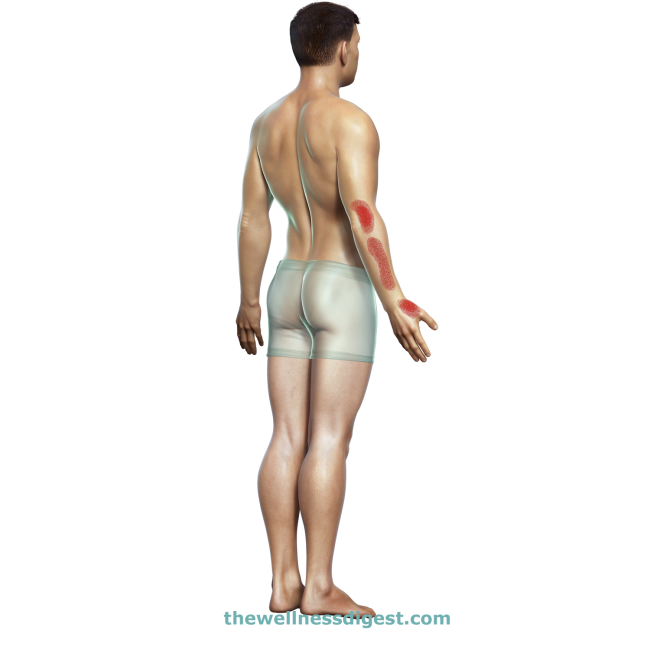
Pain along the outside of the elbow and thumb side of the forearm may involve the brachioradialis muscle. This muscle works whenever you bend your elbow, lift or lower an object, carry something with your thumb pointing upward, or repeatedly grip and turn a tool.
A sore or overworked brachioradialis may cause an aching or pulling sensation near the outside of the elbow and upper forearm. Pain can sometimes extend farther down the forearm toward the back of the hand and thumb.
However, pain in this area can also come from an irritated tendon, a compressed nerve, the wrist, or the neck. The location of the pain provides a clue, but it does not prove that the brachioradialis is the cause.
Brachioradialis Pain at a Glance
Common pain areas
- Outside of the elbow
- Upper thumb-side forearm
- Along the outer forearm toward the wrist
- Occasionally the back of the hand, thumb, or index-finger area
Activities that may aggravate it
- Hammering
- Using a screwdriver, drill, wrench, or pruning shears
- Carrying buckets, grocery bags, feed sacks, or tools
- Lifting a cup, pan, or other object with one hand
- Opening jars or turning stubborn handles
- Repetitive pulling, gripping, or forearm rotation
- Weight training, especially hammer curls and pulling exercises
Get medical help if you have
- Lingering numbness or tingling
- Burning or electric pain
- True weakness in the wrist, fingers, or grip
- Sudden bruising, swelling, or a visible deformity
- Pain following a fall, a hard blow, or forceful pulling injury
Where Is the Brachioradialis Muscle?
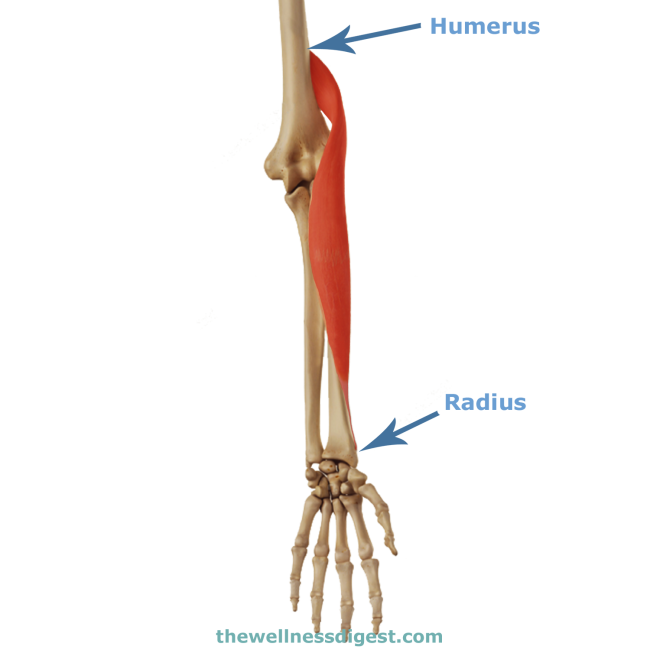
The brachioradialis is a long, fairly superficial muscle on the outer, thumb-side portion of the forearm.
It begins on the lower outside portion of the upper-arm bone, crosses the elbow, and attaches to the radius near the thumb side of the wrist. Although much of the muscle lies in the forearm, it crosses only the elbow joint.
You can often see or feel it when you hold your hand in a handshake position and bend your elbow against resistance. The muscle becomes prominent between the outside of the elbow and the middle of the forearm.
What Does the Brachioradialis Do?
The brachioradialis helps:
- Bend the elbow
- Stabilize the forearm while the elbow is bending
- Bring the forearm toward a neutral, thumb-up position
- Control the arm while an object is being lifted or lowered
It works in all forearm positions, but it is particularly noticeable during elbow bending with the thumb pointed upward—similar to holding a hammer, carrying a mug, or shaking someone’s hand.
This is why the muscle can become overworked during ordinary jobs that do not look especially strenuous. A tool or bucket may not be very heavy, but hundreds of repeated lifts, turns, or controlled lowering movements can add up.
What Does Brachioradialis Muscle Pain Feel Like?
Brachioradialis pain may feel like:
- A deep ache along the outside of the elbow or forearm
- Tenderness when pressing into the muscle
- Tightness or fatigue in the upper forearm
- Sharp pain when lifting or lowering something
- Pain when bending the elbow against resistance
- Pain when turning a handle, tool, key, or jar lid
- Reduced grip strength because gripping increases the pain
Published medical literature describes pain that may travel from the outer elbow through the forearm and occasionally toward the back of the hand, thumb, and index finger. Hammering, using a screwdriver, opening a door, shaking hands, and lowering a cup are among the activities reported to provoke symptoms.
Pain spreading toward the hand does not automatically mean that a muscle is referring pain there. Nerves, tendons, joints, and the neck can produce similar patterns.
What About Numbness and Tingling?
Simple muscle soreness does not usually cause clear numbness or persistent tingling.
The superficial radial nerve travels close to and beneath portions of the brachioradialis. Irritation or compression of this nerve can cause burning, tingling, or altered sensation over the thumb side of the back of the hand.
Numbness, tingling, electric pain, or genuine loss of strength should therefore be treated as possible nerve symptoms rather than casually blamed on a tight muscle.
What Commonly Overworks the Brachioradialis?
The muscle is commonly overloaded by a combination of:
- Repeated elbow bending
- Forceful gripping
- Forearm twisting
- Lifting with the thumb pointing upward
- Controlling an object as it is lowered
- Suddenly catching or holding an unexpected load
- Work and Household Activities
Examples include:
- Using a hammer, mallet, wrench, or screwdriver
- Operating pruning shears or loppers
- Carrying buckets, watering cans, toolboxes, or feed
- Pulling weeds or roots
- Moving boards, rocks, bags of soil, or groceries
- Scrubbing, stirring, or repeatedly turning a handle
- Lifting heavy cookware
- Opening jars and stiff doors
- Crafts and Repetitive Hand Work
Sewing, knitting, writing, carving, leatherwork, and similar activities do not always place a heavy load on the muscle. However, prolonged gripping and holding the forearm in one position may contribute to fatigue, especially when combined with other hand-intensive work.
Sports and Exercise
The brachioradialis may also be stressed during:
- Tennis and racquet sports
- Throwing
- Climbing
- Rowing
Pull-ups - Hammer curls
- Heavy carries
- Repetitive gripping exercises
A sudden increase in weight, duration, or repetitions is often more troublesome than the activity itself.
How to Find the Brachioradialis
This is a simple way to locate the muscle. It is not a diagnostic test.
- Rest your arm at your side with your elbow bent.
- Hold your hand in a handshake position with the thumb pointing upward.
- Place the other hand over the outer portion of your upper forearm.
- Gently try to bend your elbow while resisting the movement with your other hand.
You should feel the brachioradialis tighten beneath your fingers.
Tenderness in a muscle may suggest it has been working hard, but many healthy muscles are uncomfortable when pressed firmly. Tenderness alone does not establish the source of pain.
Avoid pressing deeply into the elbow crease or aggressively probing around areas that produce tingling, burning, or electric sensations.
What May Help an Overworked Brachioradialis?
The right approach depends on whether the problem is ordinary overuse, a muscle strain, tendon irritation, nerve compression, or something else.
Reduce the Aggravating Load
You may not need to stop using the arm completely. Start by reducing the task that repeatedly reproduces the pain.
That may mean:
- Carrying lighter loads
- Using two hands instead of one
- Filling buckets only partway
- Keeping the load closer to your body
- Alternating hands when practical
- Switching tasks before the arm becomes exhausted
- Using tools with larger or more comfortable handles
- Taking brief breaks during repetitive work
Trying to “work through” worsening forearm pain often changes a manageable irritation into a much more stubborn problem.
Keep the Arm Moving Comfortably
Complete rest can leave the arm stiff. Several times a day, gently bend and straighten the elbow and rotate the palm upward and downward.
Stay within a comfortable range. Do not force a stretch through sharp, burning, or electrical pain.
Use Heat or Cold for Comfort
Cold may feel helpful after a recent flare or unusually heavy work. Warmth may feel better for general stiffness and muscle tightness.
Use a cloth barrier and avoid extreme temperatures. Neither heat nor cold identifies or corrects the underlying cause; they are comfort measures.
Try Gentle Self-Massage
Gentle massage over the fleshy portion of the brachioradialis may help reduce temporary tightness or soreness.
Use the fingers, thumb, or a soft massage ball with light-to-moderate pressure. Work slowly rather than digging into the muscle. Stop if pressure causes:
- Tingling
- Numbness
- Burning
- Electric pain
- Increased symptoms extending into the hand
Do not repeatedly grind into the bony outer elbow. More pressure is not automatically better treatment. Sometimes it is merely more pressure, a revelation the massage-tool industry would prefer we keep quiet.
Return to Heavier Work Gradually
Once everyday movement is comfortable, gradually rebuild tolerance to gripping, lifting, and elbow bending.
Begin with lighter loads and fewer repetitions. Increase one variable at a time rather than returning immediately to the same workload that caused the problem.
When to See a Healthcare Professional
Seek Medical Help When:
- Pain began after a fall, collision, or forceful pulling injury
- You felt or heard a pop
- Significant swelling or bruising develops
- You cannot comfortably bend or straighten the elbow
- Your grip is becoming progressively weaker
- You are dropping objects
- Pain repeatedly wakes you at night
- Symptoms continue to worsen despite reducing the aggravating activity
- The problem keeps returning whenever you resume normal work
- Pain has not begun to improve after one to two weeks of reasonable self-care
Seek prompt medical attention for numbness, persistent tingling, loss of wrist or finger movement, a cold or discolored hand, severe swelling, or rapidly increasing pain.
Other Muscles That May Be Involved
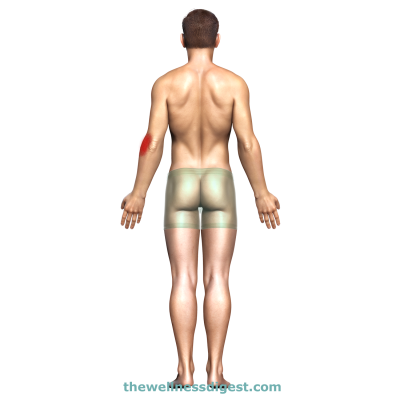
Anconeus Muscle
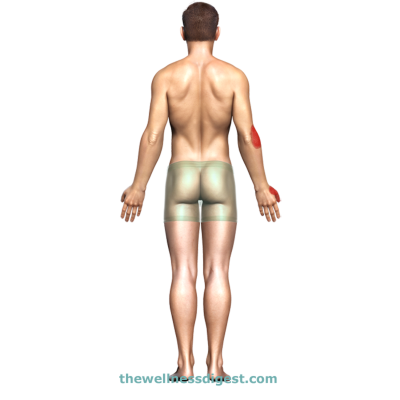
Supinator Muscle
Shoulder and neck problems may also change how the arm is used or produce symptoms that travel into the elbow, forearm, and hand.
Bottom Line
The brachioradialis is a heavily used elbow and forearm muscle. Repeated lifting, gripping, hammering, carrying, and tool use may leave it sore, tight, or painful.
Pain within the outer forearm that worsens when lifting with a thumb-up grip may point toward the brachioradialis. But pain near the outside of the elbow can also come from tennis elbow, radial nerve irritation, another forearm muscle, or the neck.
Use the pain pattern as a starting point—not as a do-it-yourself diagnosis.