Skip to content

Rainey Lynd

Triceps Brachii Muscle Pain

    The triceps brachii muscle is found in the back of the upper arm. It can contribute to dull aching pain in the shoulder upper arm, elbow, forearm which occasionally extends into the fingers. The elbow can be hypersensitive and difficult to bend and straighten.

    Latissimus Dorsi Muscle: Shoulder, Arm, Low Abdominal, Pain

      The latissimus dorsi muscle can contribute to pain in the shoulder, upper back, and arm going down into the hand. The muscle can also cause pain in the side of the ribcage and lower abdomen. It is the muscle that most often causes the ‘side stitch’.

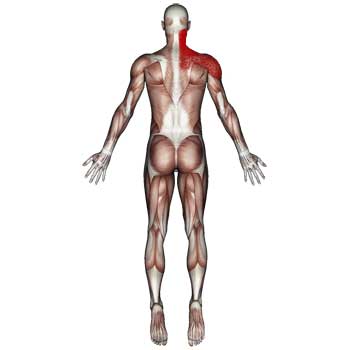
      Levator Scapulae Muscle: Neck, Shoulder, Headache, Pain

        The levator scapulae connect the shoulder blade to the vertebra of the neck. The muscle contributes to pain in the shoulder, neck, and the base of the skull. The muscle causes a stiff neck. It can contribute to headaches at the base of the skull and up into the back of the head.

        Subclavius Muscle: Collarbone, Arm, Hand, Finger Pain

          The subclavius muscle is found just under the collarbone. It contributes to pain in the area around the clavicle (collarbone), shoulder, upper arm, forearm, thumb and fingers. It can also contribute to tingling and numbness in the arm and hand.

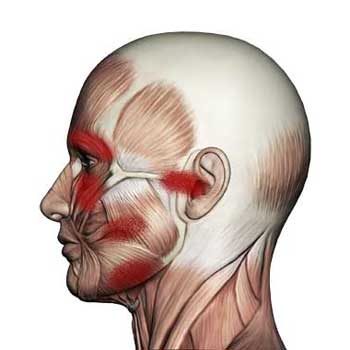
          Orbicularis Oculi Muscle: Eye Pain and Twitching

            The orbicularis oculi muscle is the muscle that encircles the eye. The muscle contributes to pain above the eye that travels down the side of the nose. It can also contribute to twitching of the eye and a drooping eyelid.

            Scalene Muscles: Neck, Shoulder, Chest, Upper Back, Arm, Pain

              Scalene muscles are a prime contributor to thoracic outlet syndrome as well as neck, shoulder, chest, upper back and arm pain. Muscle twitching, jerking and restlessness similar to restless leg syndrome felt in the neck and shoulder is a classic sign of scalene dysfunction

              Coracobrachialis Muscle Pain

                The coracobrachialis muscle connects the shoulder to the upper arm. It can contribute to pain in the shoulder, back of the arm, and occasionally the middle finger. Pain is often felt when attempting to put your hand behind your back and or raising your arm over your head.

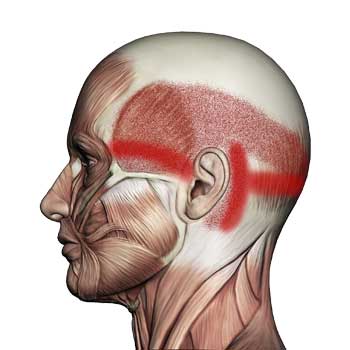
                Occipitalis Muscle Pain

                  The occipitalis muscle can contribute to headaches at the top of the head and the back of the head just above the neck. It can also play a role in pain behind the eye and occasionally contribute to pain in the upper teeth.

                  Biceps Brachii Muscle Pain

                    The biceps brachii muscle is found in the front of the upper arm. It contributes to pain in the shoulder, upper arm and elbow. Straightening the arm when the palm is facing up can be painful and difficult.

                    Masseter Muscle: Jaw, Eye, Ear, Pain, Sensitive Teeth

                      The masseter muscle is one of the muscles that you use to chew your food. Dysfunction in this muscle can contribute to pain around the eye, in the jaw, in the cheek area and the ear. It can be associated with ringing in the ear (tinnitus) and TMJ.

                      Deltoid Muscle: Shoulder Pain and Weakness

                        The deltoid is the muscle that covers the tip of the shoulder. It contributes to pain in the shoulder and upper arm. One indication of problems with the deltoid muscle is pain is most intense during activity and subsides when resting the shoulder and arm.

                        Teres Major Muscle: Arm and Shoulder Pain

                          The teres major is a shoulder muscle. It can contribute to pain in the shoulder, upper arm, and forearm. An indication of teres major muscle involvement is pain is felt in the shoulder and upper arm skipping the elbow and reoccurring in the back of the forearm.

                          Infraspinatus Muscle: Shoulder, Neck, Shoulder, Arm Pain, Rotator Cuff

                            The infraspinatus muscle lines the back of the shoulder blade. It is one of the muscles that can contribute to frozen shoulder. The muscle can cause pain in the shoulder, neck, pain down the outside of the arm which descends down into the thumb and hand. Shoulder mobility can be greatly reduced.