
Rainey Lynd LMT (Retired) - 18 years of experience treating muscle pain.
Originally Published February 2014 - Updated January 20, 2026
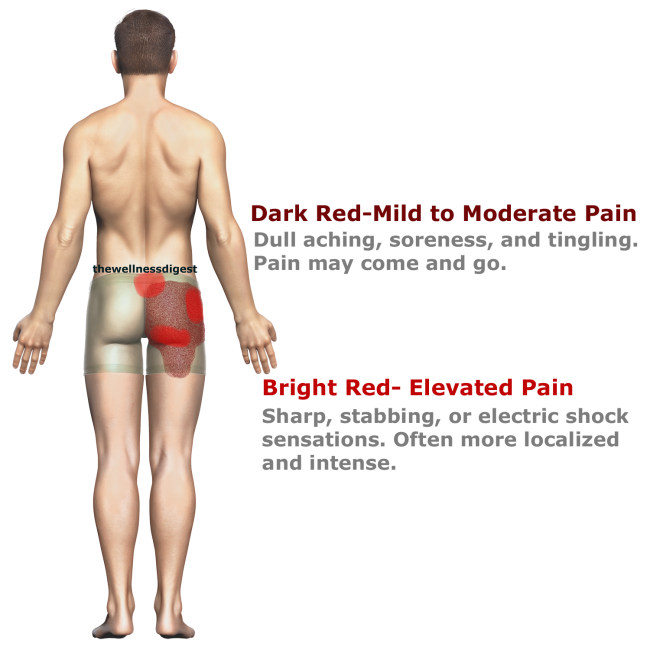
Pain that covers the buttock area? Intense pain at the bottom of the spine and hip? Learn about the gluteus maximus muscle.
Does your backside hurt after sitting for a while? When you stand from a sitting position, does it take a minute to reach an upright position? Your lower back hurts, and the pain feels connected to your hip. Climbing stairs or walking uphill is torture.
This combination of symptoms points to dysfunction of the largest muscle in your body, the gluteus maximus (glute max).
Though several muscles cause and contribute to these symptoms. The gluteus maximus is a top suspect.
These steps reduce inflammation and give immediate relief:
-
- Ice it - 15-20 minutes every 2-3 hours. Make sure there is a barrier, like a thin towel, between the ice pack and your skin
- Find a relief position - Lie on your non-painful side with a pillow between your knees, or lie on your stomach with a pillow under your hips
- Limit sitting - Sitting puts direct pressure on the gluteus maximus. Stand and move every 20 minutes
- Avoid stairs and hills -These aggravate gluteus maximus pain. Stick to level surfaces. This is a time it is okay to use the elevator!
- Read "Sudden Pain (0-2 Weeks)" section below
 Emergency symptoms - Click here for when to seek medical help.
Table of Contents
Understanding the Gluteus Maximus
Where Is The Gluteus Maximus Muscle Located?
What Does The Glute Max Muscle Do?
Recognizing the Pain
Symptoms Of Glute Max Pain
Gluteus Maximus Pain or SI Joint Dysfunction?
When To See A Doctor
Causes and Triggers
What Causes Gluteus Maximus Pain?
Trigger Point Pain
Where Is The Gluteus Maximus Located?
The gluteus maximus is the large, thick muscle that forms the bulk of your buttocks. It sits just under the skin and covers several smaller hip muscles beneath it.
Where it attaches:
The muscle originates (starts) from three areas:
- The back edge of your hip bone (ilium)
- Your sacrum (the triangular bone at the base of your spine)
- Your tailbone (coccyx) and the surrounding connective tissue
The muscle inserts (ends) at two points:
- Most of the muscle blends into the IT band (not shown), a thick strip of tissue running down the outside of your thigh to your knee
A smaller portion attaches to the back of your thighbone (femur)
These attachment points give the gluteus maximus the leverage to produce powerful hip movements like standing up, climbing stairs, and running.
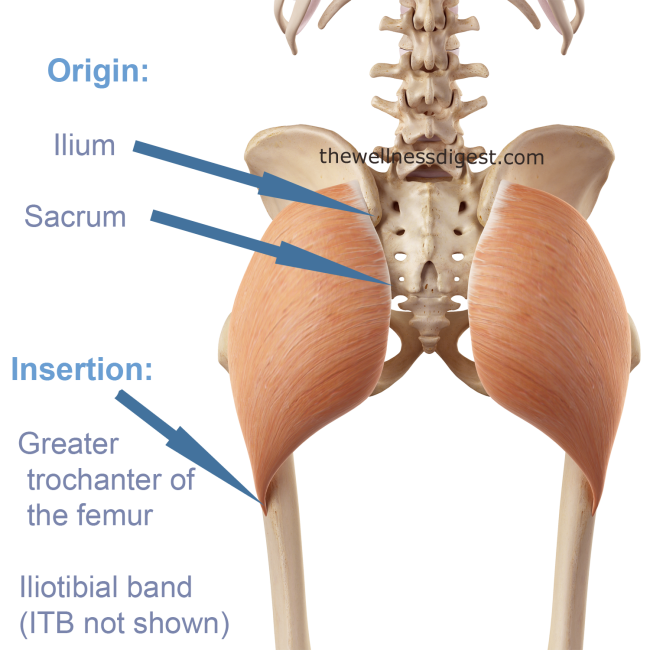
This wide spread of attachments is what makes it powerful enough to get you up from a chair, push you up stairs, and move you forward when you walk or run.
What Does The Gluteus Maximus Do?
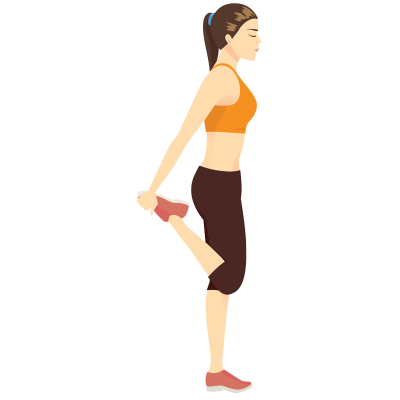
Thigh Extension

Thign extension is the lifting of your leg out behind the body. This is the primary job of the gluteus maximus.
Thigh Abduction with Hip Flexed
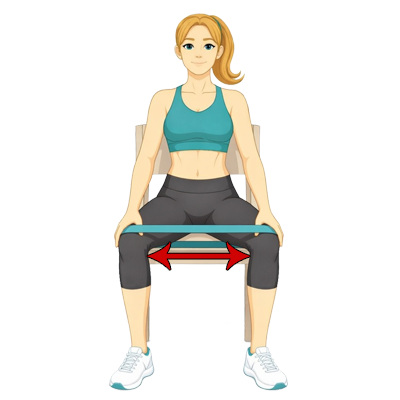
Thigh abduction with the hip flexed is the movement of pulling your knees apart while sitting. The gluteus maximus assists with this movement when your hip is bent.
Stabilizes Pelvis
When your weight is on one leg, the gluteus maximus tightens to keep your pelvis stable and level. This happens when you balance on one leg, walk, or run.
The gluteus maximus is your lower body's powerhouse. It lifts and moves your leg behind you and provides the power to lift you from a sitting position. The size and power of the muscle is the reason humans walk upright.
A weak or painful gluteus maximus makes simple activities exhausting. Standing up requires more effort. Stairs become a challenge. Walking uphill feels impossible. Your body compensates by overworking your lower back and hamstrings, which often leads to additional pain in those areas.
When your glute max works properly, these movements feel effortless and natural.
The glute max works every time you:
- Stand up from a chair
- Climb stairs or walk uphill or up an incline
- Get out of a car (pushing yourself up and out)
- Rise from kneeling or getting up off the floor
- Walk or run at any speed (it works with each step to push you forward)
- Squat down to pick something up, then stand back up
- Step up onto a curb
- Get into a vehicle
- Push a heavy object like a shopping cart or lawnmower
- Stand on one leg (it stabilizes your pelvis)
What Does Glute Max Pain Feel Like?
Gluteus maximus pain makes you dread simple movements you never thought twice about. Standing up from a chair requires a push from your arms. Stairs become an obstacle you'd rather avoid. You find yourself looking for handrails and searching out the nearest seat.
Where You Feel the Pain:
- Deep, achy pain in the fleshy part of your buttock (usually one side)
- Soreness across the lower part of your buttock where you sit
- Discomfort at the base of your spine and tailbone area
- Aching down the back of your thigh (typically not below the knee)
- Tenderness where your buttock meets your thigh
- Pain that spreads across the top of your hip bone
How It Affects Movement:
- Standing up from a chair requires pushing with your arms
- Climbing stairs becomes slow and painful. You tend to take one step at a time
- Walking uphill or on an incline significantly increases discomfort
- Getting out of a car is awkward; you have to shift your weight carefully
- Bending forward to pick something up, then straightening back up hurts
- You walk with a shorter stride on the painful side to avoid full hip extension
- Running or jogging is impossible or extremely painful
- Kneeling down and getting back up becomes a careful, deliberate process
How It Affects Your Sleep
Sleep can be challenging with gluteus maximus pain, especially when rolling over or lying on the affected side. Straightening your legs can also cause twinges of pain and muscle aching.
Best position: On your non-painful side
Place a long knee pillow between your knees to keep your hips aligned. This position avoids putting pressure on the inflamed muscle and doesn't require straightening your legs, which can aggravate it.
Second best: On your back with pillow support
Put a bolster pillow under your knees to slightly bend your hips. This takes tension off the glute max and prevents the muscle from being stretched.
Avoid: Sleeping on your painful side
Direct pressure on the muscle increases pain and can disrupt your sleep throughout the night.
The key: Proper pillow placement keeps your hips aligned, reducing pressure on the muscle.
Is It Gluteus Maximus Pain or Sacroiliac Joint Dysfunction?
Gluteus maximus trigger points are frequently mistaken for sacroiliac (SI) joint problems because the muscle attaches directly to your sacrum and pelvis, which is right where the SI joint sits. Both conditions cause pain at the base of your spine and buttock area, and both hurt when you stand up or climb stairs.
Key Differences
- Glute max pain: Responds to massage, stretching, and strengthening exercises. Pain is in the muscle tissue itself.
- SI joint dysfunction: Involves joint instability or inflammation. The pain often increases with stretching and strengthening exercises. May require joint-specific treatment.
If your symptoms don't improve with the muscle-focused treatments in this guide after 2-3 weeks, consider evaluation for SI joint involvement. Many people have both issues simultaneously.
NOTE: If exercises and stretching increase your pain, stop and see a medical professional.
When Should I See A Doctor For Gluteus Maximus Pain?
Most glute max pain improves with self-care, but certain symptoms require medical evaluation. Here's when to seek help:
SEEK IMMEDIATE MEDICAL CARE IF YOU HAVE:- Loss of bowel or bladder control
- Numbness in groin, inner thighs, or buttocks
- Progressive leg or foot weakness
- Severe pain with fever or chills
Seek Medical Evaluation Within 24-48 Hours:
- Pain following significant trauma (car accident, direct hit to the muscle, high-impact fall)
- Severe pain that doesn't improve with rest or position changes
- Rapidly spreading numbness or tingling
Schedule Medical Consultation (Within 1-2 Weeks):
- No improvement after 2-3 weeks of consistent appropriate self-care
- Pain that awakens you from sleep or is worse at night
- Age over 50 with new onset symptoms
- History of osteoporosis or prolonged corticosteroid use
- Pain in both legs simultaneously
- Recurrent episodes are becoming more frequent or severe
What Causes Glute Max Pain?
To fix a problem, you must understand the events that caused it. When did the pain start? What were you doing? Did it hit suddenly, after a fall or a hard exercise session? Is it pain that increased gradually, over weeks or months? Do you feel knots in the muscle that hurt when pressure is applied? Identifying the when, where, how, and why will help you choose the right treatment plan.
Sudden Onset Pain Causes
Sudden onset gluteus maximus pain happens quickly, within 48 hours of a specific incident or activity. The pain is typically sharp and severe at first, then may settle into a deep, persistent ache.
Common Triggers:
- Direct Impact - Falling directly onto your buttock, getting hit during contact sports, or being in a car accident
- Sudden Overexertion - Heavy squats or deadlifts, sprinting. explosive jumping without warming up, or you're not in shape
- Awkward Movement - Stepping in a hole, slipping on ice, or quick pivots in sports
- New High-Intensity Activity - Starting a hiking, stair-running, or running program too aggressively, taking on a physically demanding job after being sedentary, or shoveling snow after months of inactivity
- Lifting Injuries - Lifting something heavy with poor form, especially when straightening up from a bent position
Ongoing Pain Causes
Ongoing glute max pain develops gradually over weeks to months and is characterized by persistent, recurring symptoms that may come and go but never fully resolve.
Common Triggers:
- Sedentary Lifestyle - Extended sitting weakens your glutes dramatically. When you finally do stand up, climb stairs, or walk uphill, the weakened muscle can't handle the demand.
- The "Weekend Warrior" Pattern - Sitting all week, then overdoing physical activity on weekends, is a classic setup for chronic glute pain.
- Repetitive Hip Extension Activities - Frequent stair climbing (especially for people who live in multi-story homes or walk-ups), regular uphill walking or running, or jobs requiring repeated standing from squatting positions, gradually overwork the muscle. Without adequate recovery, the constant demand leads to persistent strain..
- Muscle Weakness and Imbalances - When your glutes are weak, other muscles (hamstrings, lower back) take on the workload. This creates an unhealthy movement pattern where your gluteus maximus never fully does its job, staying in a chronically weakened, painful state. This is extremely common in people who sit for work.
- Overcompensation Patterns - One leg slightly longer than the other, flat feet, knee problems, or pelvic misalignment creates uneven stress on your glutes. Over time, this constant imbalance leads to one side becoming chronically overworked and painful.
- Previous Injuries - An old hip, lower back, knee, or ankle injury can permanently alter how you move. These modified movement patterns chronically overwork your gluteus maximus, even years after the original injury healed.
- Age-Related Muscle Loss - After age 50, muscle mass naturally declines (sarcopenia). The gluteus maximus is particularly vulnerable because sitting accelerates the loss. Weaker glutes strain more easily during normal activities that used to be effortless.
Daily Habits That Trigger Pain
Movements and actions you do every day without a second thought can lead to problems with the gluteus maximus. Becoming aware of these movements and patterns helps you make simple changes to reduce symptoms.
Common Triggers:
- Multi-story living - Climbing stairs multiple times daily in split-level homes, walk-up apartments, or office buildings
- Frequent standing from low surfaces - Playing with children on the floor, low couches or chairs that require extra effort to get up
- Hilly terrain - Walking dogs on sloped sidewalks, living in hilly neighborhoods, parking lots with inclines
- Low vehicle seats - Older cars or sports cars with low seats that require pushing yourself up and out repeatedly
- Gardening and yard work - Repeated squatting down to weed or plant, then pushing yourself back up to standing
- Retail or teaching jobs - Constantly standing up from crouching to help customers or students, getting up and down from demonstration positions
- Childcare or eldercare - Lifting toddlers from cribs or car seats, helping someone up from bed or a chair, several times a day
The pattern to notice: Activities involving repeated standing from sitting, frequent stair climbing, or sudden physical demands after prolonged inactivity all stress the gluteus maximus. The muscle becomes weak from sitting, then gets overwhelmed when you ask it to work. Small changes in how you approach these activities and in gradually building strength can make a world of difference.
Sports That Stress the Gluteus Maximus
Athletes are especially vulnerable to gluteus maximus problems due to explosive movements, heavy loading, and high training volumes.
High-Risk Sports:
- Running and sprinting - Every step requires gluteus maximus contraction to push off. Sprinters generate an enormous force with each stride. Hill running and trail running with steep inclines place extreme demands on the muscles. Increasing mileage or intensity too quickly overwhelms recovery capacity.
- Powerlifting and Olympic weightlifting - Heavy squats, deadlifts, cleans, and snatches all require maximal gluteus maximus activation. High training volume without adequate recovery leads to chronic overload and trigger points.
- CrossFit and HIIT - High-rep squats, wall balls, box jumps, and thrusters combined with minimal rest between sessions. The "constantly varied" training often means the glutes never get recovery time.
- Track and field - Sprinting events, hurdles, long jump, triple jump, and high jump all require explosive hip extension. The repeated powerful contractions during training accumulate stress in the muscle.
- Basketball - Constant jumping, explosive first steps, and sprinting up and down the court. Players may jump 40-50+ times per game, each jump and landing requiring glute control.
- Soccer and football - Sprinting, cutting, jumping, and kicking all demand powerful hip extension. The stop-and-go nature means the muscle never settles into a rhythm.
- Skiing (downhill and cross-country) - Powerful hip extension to drive out of turns or propel forward on flats. The sustained squat position in downhill skiing keeps the muscle under constant tension.
- Rowing - The drive phase requires explosive hip extension, repeated 20-30+ times per minute for extended periods. High training volume without adequate recovery is common in competitive rowing.
- Cycling - Especially hill climbing and standing climbs, where glutes provide primary power. Track cyclists and mountain bikers face extreme demands during sprints and climbs.
- Rock climbing - Pushing up with legs on difficult routes requires powerful hip extension, often from awkward positions. Repeated attempts on challenging interfaces accumulate fatigue.
- Stair climbing competitions - Events like tower running or stadium stair races place enormous repetitive stress on the gluteus maximus with minimal recovery between training sessions.
The common thread: Explosive hip extension, heavy loading, high repetition, or inadequate recovery between training sessions. The gluteus maximus is your body's primary power generator. When you demand maximum power repeatedly without rest, it breaks down.
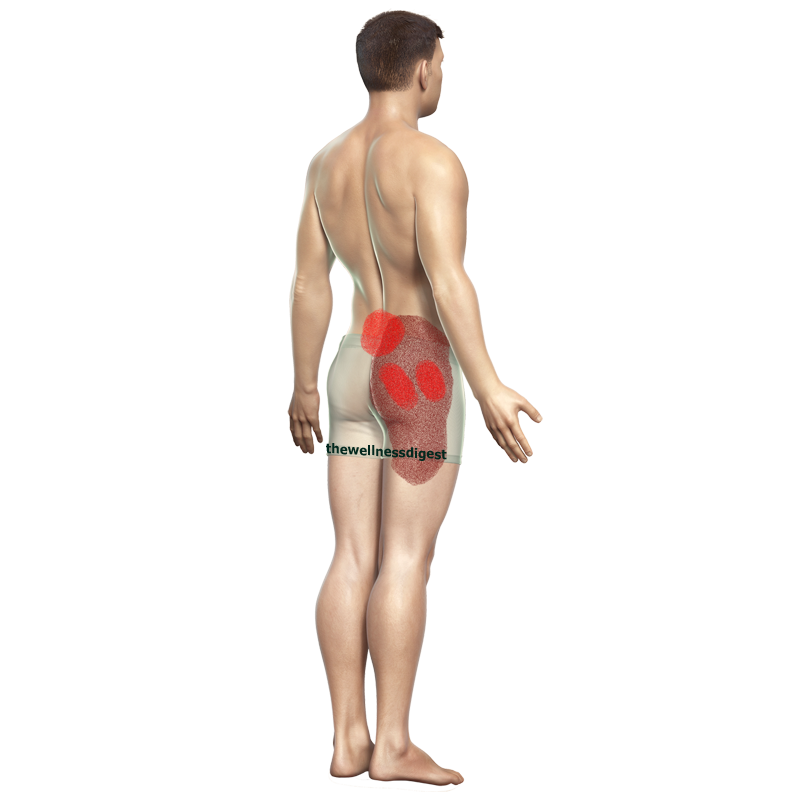
Why Do Trigger Points in Your Gluteus Maximus Cause Thigh Pain?
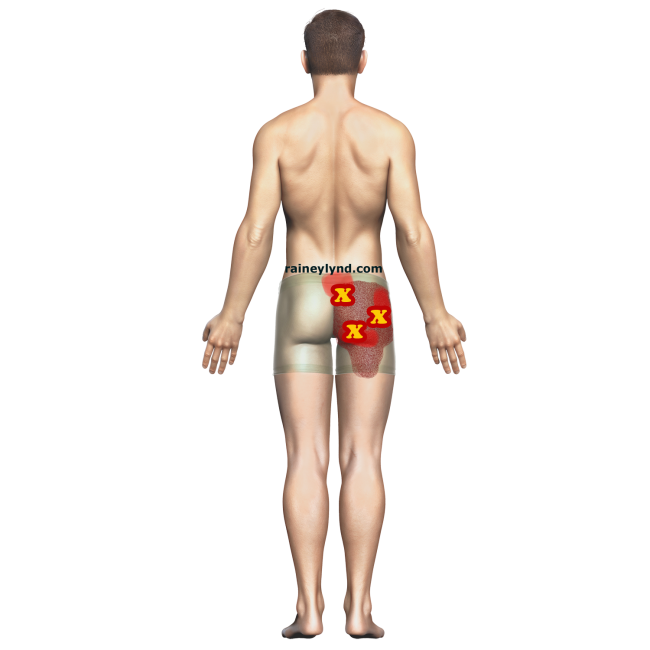
These are the areas where gluteus maximus trigger points are located.
What makes gluteus maximus trigger points especially troublesome is their referral pattern. Rather than staying localized to your buttock, these trigger points send pain down the back of your thigh, sometimes all the way to the back of your knee. This referred pain often feels like a deep ache or burning sensation. People frequently mistake this for a hamstring problem or even sciatica, when the actual source is the trigger point in the gluteus maximus.
Pain referral occurs when trigger points irritate nerve pathways within the muscle, sending pain signals to areas far from the original tight spot.
Satellite Trigger Points
When your gluteus maximus has active trigger points, your body often compensates by overworking nearby muscles. This compensation leads to "satellite" trigger points in surrounding muscles. These satellites can persist even after you've treated the original glute max trigger points.
If you've been addressing your glute max pain but still have lingering discomfort, check for active trigger points in these muscles:
- Gluteus Medius
- Gluteus minimus
- Iliopsoas
- Rectus Femoris
- Biceps Femoris
- Semi Muscles (hamstrings)
Do You Have Trigger Points?
Not all gluteus maximus pain involves trigger points. You likely have active trigger points if you experience:
- ☐ Extreme spot tenderness when pressing buttock
- ☐ "Golf ball or Marble" sensation - hard knot in muscle
- ☐ Pain shoots from buttock down back of thigh
- ☐ Muscle spasm that won't release
- ☐ Stretching provides no relief or makes pain worse
- ☐ Cannot sit longer than 15-20 minutes
- ☐ Difficulty finding a comfortable sleeping position
The Book I Recommend Most for Trigger Point Pain
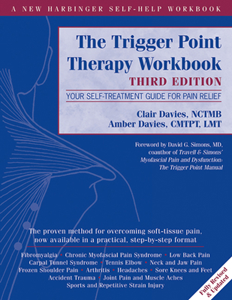
Learn how to find the root cause of pain and treat it at home.
- Clear diagnostic tools and treatment protocols
- Detailed pain pattern diagrams for every muscle
- Self-massage techniques that actually work
- Comprehensive coverage of chronic pain conditions
As an Amazon Associate, I earn from qualifying purchases.
How To Treat Gluteus Maximus Pain
Your approach depends on how long you've had the pain. Here's what works for each stage.
Sudden Pain (0-2 Weeks)
Goal: Reduce inflammation and calm muscle spasm
- Ice It - Apply ice for 15-20 minutes every 2-3 hours during the first 2-3 days. Never put ice directly on the skin; have a barrier, like a thin towel, in place to protect from ice burn. (Ice pack recommendation)
Modify Your Activities
- Limit stair climbing - use elevators or go up one step at a time if you must use stairs
- Avoid low chairs and couches - sit on higher surfaces that require less hip extension to stand up
- Use your arms to push yourself up from sitting - reduce the demand on your glutes temporarily
- Avoid hills, running, heavy squats, and lunges
- No prolonged standing on hard surfaces
Easy Movements
- Find Relief Positions - Lie on your non-painful side with a pillow between your knees. Or lie on your stomach with a pillow under your hips to take tension off the muscle..
- Take short 5-10 minute walks on flat surfaces every few hours to prevent stiffness. Walk slowly and avoid inclines..
- Don't stretch aggressively; it can make inflammation worse, increasing your pain
Once the swelling has gone down and the pain has eased, proceed to the steps below.
Start here if your pain has been ongoing for 2 or more weeks
For Ongoing Pain
Goal: Increase flexibility and address underlying causes
- Heat It - Apply heat for 15-20 minutes before stretching. Use a heating pad, warm bath, or heat wrap. For chronic pain, heat works better than ice. (Heating pad recommendation)
- Perform glute stretches (see instructions below) 2-3 times daily, holding 30-45 seconds each time. Always stretch after applying heat or after a short walk to warm up. Focus on the figure-4 stretch and the glute squeeze. (See instructions below.)
- Foam Roll - Sit on a foam roller with your painful buttock on the roller. Lean toward the painful side and roll slowly for 1-2 minutes. Stop if pain increases. Do this daily after heat application.
- Strengthen Your Glutes -Weak glutes perpetuate the problem. Focus on exercises like bridges and clamshells. above. Start with 2 sets of 10, working up to 3 sets of 15. Stronger glutes handle daily demands without breaking down.
- Strengthen Your Core - Weak abdominal and low back muscles force your glutes to overwork. Add planks and dead bugs to your routine.
If you are still in pain, it is time to check for trigger points.
For Trigger Point Pain
Goal: Release the tight knots in the muscle
- Massage Balls - Place a massage ball on the floor or a hard seated chair. Sit on it, positioning it on the tender spot. Apply steady pressure for 30-90 seconds while breathing deeply. The pain should ease during this time. Repeat 2-3 times. Do this 1-2 times daily.
- Theracane - lets you apply pressure without awkward positioning. Position the tool on the tender spot and gently push in. Hold 30-60 seconds, rest, repeat 2-3 times. This tool is excellent for all areas of the body. Recommended for those with mobility and balance issues.
The Tool That Helps You Treat Low Back/Hip Pain
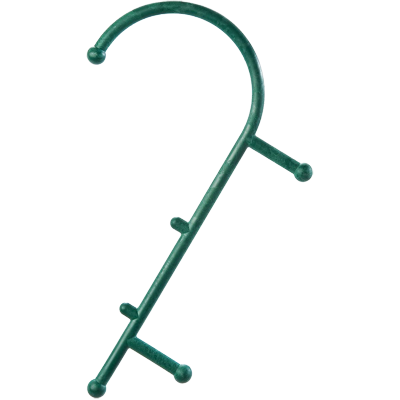
The Theracane is a tool I recommend for those interested in treating muscle pain. It can be used on most areas of the body with pinpoint accuracy. It allows you to reach all muscles easily without twisting into awkward positions or getting on the floor.
Highly recommended for anyone with mobility or balance issues.
A detailed instruction manual guides you through how to use the tool on various muscles.
Best Stretches For Gluteus Maximus Pain
Note: Exercises that require you to lay down can be done on the floor or bed. Seated exercise should be done on a firm seat base.
Seated Figure 4 Stretch
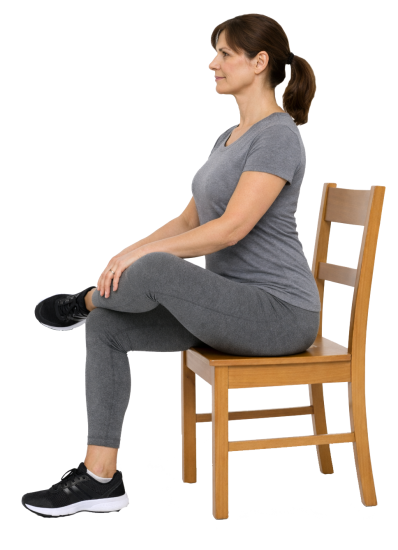
Lean forward slightly until you feel a stretch in your buttock. If you do not feel the stretch, you are leaning forward too far, or you're not keeping your back straight.
Starting position: Sit in a chair with both feet flat on the floor
- Place your right ankle on top of your left knee
- Keep your back straight and gently lean forward from your hips
- You should feel a stretch deep in your right buttock
- Push down gently on your right knee with your hand to deepen the stretch
- Repeat on opposite side
Hold time: 30 seconds on each side, repeat 2-3 times
Key tips: Keep your back straight—don't round your shoulders. Stop if you feel any sharp pain.
Glute Squeeze
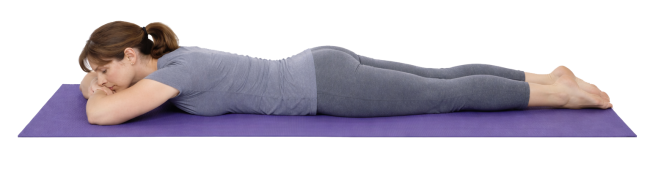
Do not let the simplicity of the exercise fool you, it works! Keep your legs straight and relaxed; it is the glute muscles that do the work.
Starting position: Lie face down with your head resting on folded arms.
- Keep both legs straight
- Squeeze your butt muscles tight, as if you're trying to hold a coin between your cheeks
- Hold the squeeze for 3-5 seconds
- Release and relax completely
Reps: 15-20 squeezes
Key tips:
- Keep your legs straight the entire time
- Don't arch your lower back
- Focus on squeezing only your butt muscles
- Stop if you feel tingling down your leg.
Common MistakeSpeed: Fast and jerky movements will do more harm than good.
Control is the key.
Slow down and focus on your movements and posture for effective results.
Gluteus Maximus Strengthening Exercises
Glute Bridges
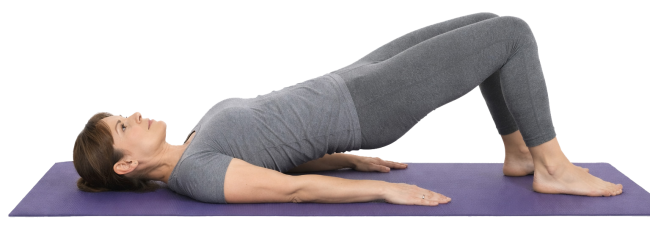
Keep your shoulders and feet flat on the ground. Keep your back straight and do not allow the abs to collapse down.
Starting position: Lie on your back with knees bent and feet flat on the floor, hip-width apart.
- Squeeze your buttocks together and lift your hips off the floor
- Your body should form a straight line from your shoulders to knees
- Hold at the top for 2 seconds
- Lower back down slowly
Reps/Sets: 12-15 reps. Work up to 2-3 sets
Key tips: Don't arch your lower back. Push through your heels, not your toes. Stop if you feel fatigued or if pain increases.
Beginner's Squat
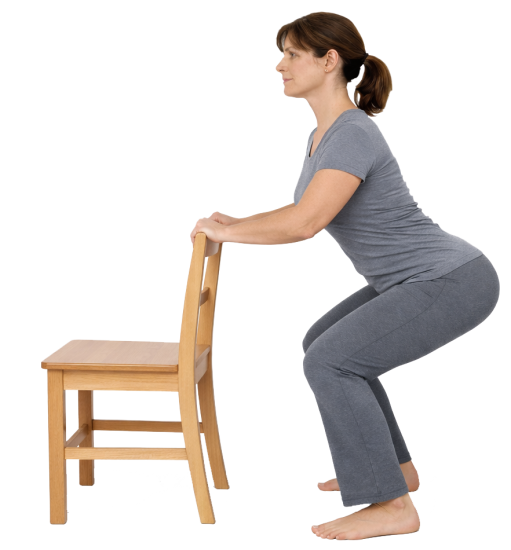
Push your hips back as if you're going to sit in a chair, keeping your weight in your heels. Keep your back straight while leaning slightly forward.
Starting position: Stand with feet hip-width apart (or slightly wider for comfort), arms extended forward for balance. Stand in front of a wall or counter if you need help balancing.
- Push your hips back as if reaching for a chair seat behind you
- Keep weight in your heels, you should be able to wiggle your toes
- Allow your torso to lean slightly forward as your hips shift back
- Lower only as far as comfortable while maintaining the hip-back position
- Squeeze your glutes to return to standing, driving through your heels
Reps/Sets:10-15 reps. Work up to 2-3 sets
Key tips: Focus on the "sit back" motion rather than bending your knees forward. You should feel this working in your buttocks. If you feel it primarily in your thighs, you're bending your knees too much. Push your hips farther back and lean your torso forward slightly. Start with a shallow depth and progress deeper as your form improves.
When Will I Feel Better?
Immediate Relief (Days 1-3)
Most people notice a drop in sharp, nagging pain within the first few days of consistent self-treatment. This is a good sign, it means inflammation is going down, but it doesn’t mean the muscle is fully healed.
Keep doing what’s working. Don’t quit early.
Reduction In Pain And Increased Mobility (Week 1-2)
You should notice improved range of motion and decreased pain: you rise up from a sitting position more easily, and climbing stairs is more tolerable. If trigger points are present, they will remain tender to the touch.
Significant Progress (Week 3-6)
In most cases, gluteus maximus pain resolves within this timeframe with consistent self-treatment. If you're not seeing steady improvement by week 4, consult a professional.
Long-Term Recovery (6-12 weeks)
Chronic or severe cases may take longer. Gradual, steady improvement is normal. Setbacks during this period are common and don't mean you're back to square one.
When to Worry: If pain is worsening despite treatment, or you're seeing zero improvement after 2 weeks of consistent daily treatment, see a healthcare provider.
How To Prevent Gluteus Maximus Pain From Returning
Preventing glute max pain is easier than treating it. Here's how to protect yourself:
Keep Your Glutes Strong
The single most important prevention strategy is maintaining glute strength. Weak glutes from prolonged sitting are the primary cause of recurring pain.
- Perform glute-strengthening exercises 2-3 times weekly: bridges, squats, hip extensions, and clamshells. Even when pain-free, continue strengthening.
Include single-leg exercises like step-ups and lunges to address strength imbalances between sides. - Add core strengthening: planks, dead bugs, and bird dogs. A strong core reduces the load on your glutes.
Move Often and Sit Less
- Stand up and walk for 2-3 minutes every 30-45 minutes when sitting for work.
- Take the stairs regularly to maintain your glute strength, but build up gradually. (Do this only after the pain is gone.)
- Consider a standing desk to alternate between sitting and standing throughout the day.
- When you do sit, use a chair height that makes standing up easier (knees at or slightly below hip level).
Progress Gradually
- Increase exercise intensity slowly, no more than 10% per week for stair climbing, hill walking, or running.
- Allow 48 hours between workouts that heavily stress your glutes (squats, deadlifts, hill running).
- Back off at the first sign of pain. Pushing through glute soreness leads to trigger points.
Warm Up Properly
- Spend 5-10 minutes doing warm-up movements before exercise: leg swings, walking lunges, bodyweight squats, hip circles.
- Walk on flat ground for 5 minutes before tackling hills or stairs.
- Save static stretching for after your workout when muscles are warm.
Use Proper Mechanics
- When standing up from a chair: scoot to the edge, lean forward slightly, and push through your heels, not your toes.
- When lifting from the ground: use your legs to stand, squeezing your glutes at the top rather than arching your back.
- On stairs: use the handrail on the first few steps if you feel weak, and engage your glutes intentionally with each step up.
Mix It Up
- Cross-train to avoid repetitive strain. If you run hills, add flat cycling or swimming to your routine. If you climb stairs daily, add yoga or Pilates for variety.
- Variety prevents overuse while maintaining overall fitness.
Address Underlying Issues
- If you have recurring problems, consider evaluation for leg length discrepancy, foot problems, or pelvic alignment issues.
- Flat feet or improper footwear can alter your gait and overload one glute.
- Previous hip, knee, or ankle injuries may create compensation patterns that chronically stress your gluteus maximus.
The Bottom Line
The best prevention is staying active and keeping your glutes strong. Prolonged sitting weakens them; regular movement and targeted strengthening protects them. Don't wait until pain returns to restart your exercises.
Frequently Asked Questions
Q: How long does it take for gluteus maximus pain to heal?
A: It depends on the cause and severity. Acute pain from overexertion typically improves within 2-3 weeks with proper rest and treatment. Chronic trigger point pain often takes 4-8 weeks of consistent stretching, strengthening, and trigger point work to resolve. If your pain stems from significant weakness (common after prolonged sitting), expect 8-12 weeks to rebuild strength and eliminate symptoms. The key is consistency; people who do their exercises 3-4 times weekly recover faster than those who skip days. If you see no improvement after 4 weeks of appropriate self-care, seek professional evaluation.
Q: How do I know if it's my gluteus maximus or my SI joint?
A: Both cause pain in the same general area, the base of your spine and upper buttock, making them easy to confuse. Gluteus maximus pain typically responds well to massage, stretching, and strengthening exercises. You can often reproduce the pain by pressing directly into the muscle tissue. SI joint pain involves the joint itself and may feel like a sharp, stabbing sensation right at the joint line (where your spine meets your pelvis). SI joint problems often require manipulation or joint-specific treatment and don't improve much with muscle work alone. Many people have both issues simultaneously since a tight glute can pull on the SI joint. If muscle-focused treatments don't help after 2-3 weeks, get evaluated for SI joint involvement.
Q: Should I continue exercising if I have glute max pain?
A: Yes, for mild to moderate pain, but cut intensity in half and avoid activities that worsen symptoms. Complete rest causes stiffness and weakness. For severe pain, rest 2-3 days before resuming. Stop if pain increases during or after exercise.
Q: Does sitting make gluteus maximus pain worse or better?
A: Sitting has a complicated relationship with gluteus maximus pain. During acute inflammation (first few days), sitting provides temporary relief because the muscle isn't working. However, prolonged sitting is terrible for your glutes in the long term; it significantly weakens them, setting you up for recurring problems. When you do sit, avoid low chairs and soft couches that make standing up difficult. Choose firm, higher seats. Don't sit for more than 30-45 minutes without standing and walking for a few minutes. The paradox is this: sitting feels better in the moment, but weakens the muscle and perpetuates the problem. Standing, walking, and gentle movement hurt more initially but promote healing and prevent recurrence.
Q: Can I still train with gluteus maximus pain?
A: Yes, but modify your activities. Avoid exercises that require explosive hip extension, such as running, jumping, heavy squats, deadlifts, lunges, and stair climbing. Instead, focus on swimming (gentle flutter kick), flat-surface cycling with low resistance, and upper-body strength training. Walking on flat ground is usually tolerable and helps maintain fitness without aggravating the muscle. As pain decreases, gradually reintroduce strengthening exercises, starting with bodyweight movements. Don't return to high-intensity activities until you can perform 15-20 bodyweight squats and walk up two flights of stairs without pain.
Product Recommendations
Below is a list of the products I recommend for hip pain. I only recommend products I use personally and have used as a therapist. You don't need every product, only the ones that you will use.
Lacrosse Massage Balls - This set of massage balls are the right size and density for glute max treatment. I keep one in my nightstand, living room, and truck for quick treatments on various muscles.
Theracane - This is a tool I think should be in every household. You can comfortably reach all areas of the body that need trigger point treatment. Highly recommended for people who have balance and mobility issues. You can use the cane to apply pressure to the muscles while standing or sitting. Detailed pamphlet included.
Lumbar Support - Whether you are sitting at a desk, dealing with long commutes, or chilling in the recliner watching movies, you will be surprised how extra support will help reduce pain. I like this brand for its firmness; it supports and does not collapse.
Warm/Cold Gel Packs - This is the brand I used in my practice and still use personally; it is large enough to cover the hips. I recommend getting the 2-pack, use one for cold treatments and the second for warm treatments.
Heating Pad - Heat with added weight. Sore muscles appreciate that combination. This pad gets warm without overheating, and its heavier weight not only feels good but also helps reduce pain.
Note: Pillows are not created equally. Bed pillows flatten quickly, which eliminates the benefit of extra support. The pillows below will provide the support you need to get a good night's rest.
Bolster Pillow - A half-moon bolster works exceptionally well if you sleep on your back. Placed under your knees, the added elevation relieves the pressure on your back and hips, reducing your pain.
Full-Length Knee Pillow - A full-body pillow is often too long to comfortably use between your legs. This pillow was specifically designed for side sleepers to support the legs and keep the spine, hips, and pelvis aligned while you sleep.
If treating your gluteus maximus doesn't resolve your symptoms, these muscles may also be involved:


Conditions That Affect And Are Affected By The Gluteus Maximus Muscle
Areas of Pain

Don't just sit there! Get up and shake that booty!
Trusted Sources for Muscle Anatomy and Pain Patterns
These are the top 6 sources I use to verify muscle function, pain referral patterns, treatment techniques, and anatomical structure. My experience as a massage therapist informs the interpretation and practical application of this information.
- Travell, J. G., & Simons, D. G. (1983). Myofascial Pain and Dysfunction: The Trigger Point Manual, Volume 1 – The Upper Extremities. Williams & Wilkins.
- Travell, J. G., & Simons, D. G. (1992). Myofascial Pain and Dysfunction: The Trigger Point Manual, Volume 2 – The Lower Extremities. Williams & Wilkins.
- Davies, C., & Davies, A. (2013). The Trigger Point Therapy Workbook: Your Self-Treatment Guide for Pain Relief (3rd ed.). New Harbinger Publications.
- Muscolino, J. E. (2016). Kinesiology: The Skeletal System and Muscle Function (3rd ed.). Mosby.
- Clay, J. H., Allen, L., & Pounds, D. (2015). Basic Clinical Massage Therapy: Integrating Anatomy and Treatment (3rd ed.). Lippincott Williams & Wilkins.
- Dalton, E. (n.d.). Myoskeletal Alignment Techniques. Retrieved from https://erikdalton.com