
Rainey Lynd - Former Licensed Massage Therapist, 18 years of experience treating muscle pain.
Originally Published February 2014 - Updated August 29, 2026
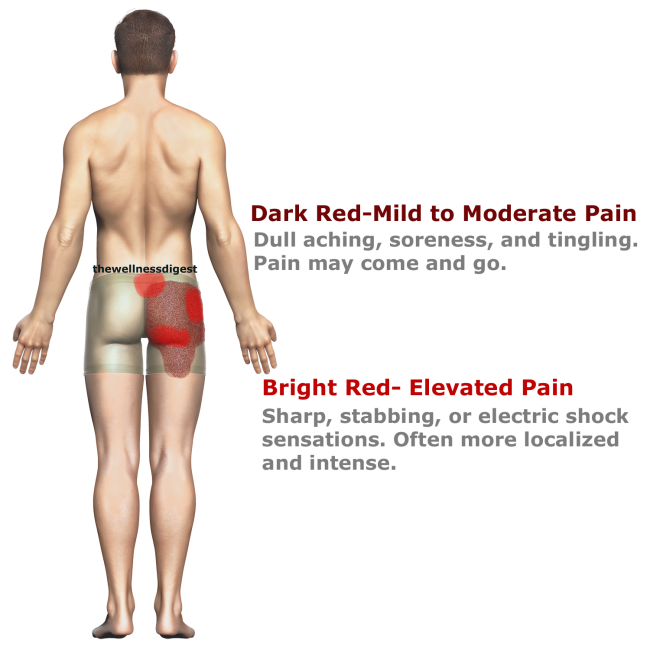
Pain that covers the buttock area? Intense pain at the bottom of the spine and hip? Learn about the gluteus maximus muscle.
Does your backside hurt after sitting at your desk all day, or after a long drive or commute? When you stand up from a sitting position, does it take a minute to get upright? Climbing stairs or walking uphill causes a deep aching pain around the tailbone and sacrum. Your lower back hurts, and the pain feels like itis radiating into your hip.
This combination of symptoms points to dysfunction of the largest muscle in your body, the gluteus maximus (glute max).
Several muscles can contribute to these symptoms, but checking the gluteus maximus is a good place to start.
Table of Contents
Understanding the Gluteus Maximus
Where Is The Gluteus Maximus Muscle Located?
What Does The Glute Max Muscle Do?
Recognizing the Pain
Symptoms Of Glute Max Pain
Gluteus Maximus Pain or SI Joint Dysfunction?
When To See A Doctor
Causes and Triggers
What Causes Gluteus Maximus Pain?
Trigger Point Pain
Where Is The Gluteus Maximus Located?
The gluteus maximus is the large, thick muscle that forms the bulk of your buttocks. It sits just under the skin and covers several smaller hip muscles beneath it.
Where it attaches:
The muscle originates (starts) from three areas:
- The back edge of your hip bone (posterior ilium)
- Your sacrum (the triangular bone at the base of your spine)
- Your tailbone (coccyx) and the surrounding connective tissue
The muscle inserts (ends) at two points:
- Most of the muscle blends into the IT band (not shown), a thick strip of tissue running down the outside of your thigh to your knee.
A smaller portion attaches to the side of your thighbone (gluteal tuberosity)
These attachment points give the gluteus maximus the leverage to produce powerful hip movements, such as standing up, climbing stairs, and running.
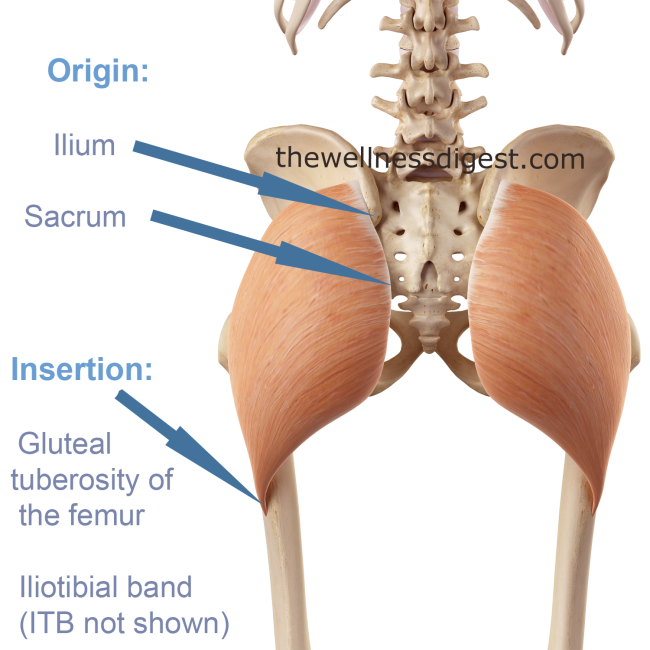
This widespread of attachments is what makes it powerful enough to get you up from a chair, climb stairs, and move you forward when you walk or run.
What Does The Gluteus Maximus Do?
- Straightens your hip / moves you forward – powers standing up, climbing stairs, and pushing off when you walk. This is the glute max primary job.
- Turns your leg outward – points your knee and toes out, like stepping out of a car.
- Takes your leg out to the side – moves your leg outward and away from your other leg. Think of a side step.
- Keeps you steady on one leg – it tightens every time you step or balance so your hips don't drop.

The gluteus maximus is your lower body's powerhouse. It lifts and moves your leg behind you and provides the power to lift you from a sitting position. The size and power of the muscle are primary reasons humans walk upright.
A weak or painful gluteus maximus makes simple activities exhausting. Standing up requires more effort. Stairs become a challenge. Walking uphill feels impossible. Your body compensates by overworking your lower back and hamstrings, which often leads to additional pain in those areas.
When your glute max works properly, these movements feel effortless and natural.
The glute max works every time you:
- Stand up from a chair
- Climb stairs or walk uphill or up an incline
- Get out of a car (pushing yourself up and out)
- Rise from kneeling or getting up off the floor
- Walk or run at any speed (it works with each step to move you forward)
- Squat down to pick something up, then stand back up
- Step up onto a curb
- Get into a vehicle
- Push a heavy object like a shopping cart or lawnmower
- Stand with your weight on one leg (it stabilizes your pelvis)
What Does Glute Max Pain Feel Like?
Gluteus maximus pain creates a deep, persistent ache in your buttock and low back that interferes with nearly everything you do. Sitting becomes uncomfortable after just a few minutes. Standing up requires effort and often triggers a sharp pain. The pain covers a wide area and it is hard to pinpoint precisely because the muscle is so large.
Where You Feel the Pain:
- Deep, achy pain in the fleshy part of your buttock (usually one side)
- Soreness across the lower part of your buttock where you sit
- Discomfort at the base of your spine and tailbone area
- Pain near the hip joint
- Aching down the back of your thigh (typically not below the knee)
- Tenderness where your buttock meets your thigh
- Pain that spreads across the top of your hip bone
How It Affects Movement:
- Standing up from a chair requires pushing with your arms
- Walking becomes slow and deliberate to minimize pain
- Climbing stairs becomes slow and painful. You tend to take one step at a time
- Walking uphill or on an incline significantly increases discomfort
- Getting out of a car is awkward; you have to shift your weight carefully
- Bending forward to pick something up, then straightening back up hurts
- You walk with a shorter stride on the painful side to avoid full hip extension
- Running or jogging is impossible or extremely painful
- Kneeling down and getting back up becomes a careful, deliberate process
Seek Medical Evaluation Within 24 Hours:
- New onset of severe pain that prevents standing or walking
- Numbness or tingling that is constant, spreading, or worsening
- Any numbness in the groin, inner thigh, or genital area
- Pain following significant trauma (car accident, direct hit to the muscle, high-impact fall)
- Severe pain that doesn't improve with rest or position changes
Schedule Medical Consultation (Within 1-2 Weeks):
- Pain that's progressively worsening despite self-treatment
- Pain that awakens you from sleep or is worse at night
- Age over 50 with new onset symptoms
- History of cancer with new buttock or low back pain
- History of osteoporosis or prolonged corticosteroid use
- Pain in both legs simultaneously
- Difficulty controlling your leg during walking (foot drop, buckling)
- Recurrent episodes are becoming more frequent or severe
What Causes Glute Max Pain?
To fix a problem, you must understand the events that caused it. When did the pain start? What were you doing? Did it hit suddenly, after a fall or a hard exercise session? Is it pain that increased gradually, over weeks or months? Do you feel knots in the muscle that hurt when pressure is applied? Identifying the when, where, how, and why will help you choose the right treatment plan.
Sudden Onset Pain Causes
Sudden onset gluteus maximus pain happens quickly, within 48 hours of a specific incident or activity. The pain often starts as mild stiffness and intensifies to severe discomfort.
Common Triggers:
- Direct Impact - Falling directly onto your buttock, getting hit during contact sports, or being in a car accident
- Overexertion - Starting a new exercise program too aggressively (CrossFit, HIIT, running), doing hundreds of squats or lunges without proper conditioning, spending hours doing yard work after being sedentary
- Sudden Powerful Movement - Jumping and landing awkwardly, catching yourself from falling by forcefully extending your hip
- Lifting Injuries - Deadlifts with poor form, moving furniture, lifting children or heavy objects repeatedly
Ongoing Pain Causes
Ongoing glute max pain develops gradually over weeks to months and is characterized by persistent, recurring symptoms that may come and go but never fully resolve. This pattern indicates ongoing muscle dysfunction.
Common Triggers:
- Prolonged Sitting - The single biggest cause of gluteus maximus dysfunction. Sitting keeps the muscle in a lengthened, inactive position for hours. When you finally stand, the weakened muscle can't handle normal demands. Office workers, drivers, students, and anyone spending 6+ hours daily seated are especially vulnerable.
- Muscle Weakness and Imbalances - When your glutes are weak, other muscles (hamstrings, lower back) take on the workload. This creates an unhealthy movement pattern where your gluteus maximus never fully does its job, staying in a chronically weakened, painful state. This is extremely common in people who sit for work.
- The "Weekend Warrior" Pattern - Sitting all week, then overdoing physical activity on weekends, is a classic setup for chronic glute pain.
- Repetitive Activities - Frequent stair climbing (especially for people who live in multi-story homes or walk-ups), regular uphill walking or running, or jobs requiring repeated standing from squatting positions, gradually overwork the muscle. Without adequate recovery, the constant demand leads to persistent strain..
- Overcompensation Patterns - One leg slightly longer than the other, flat feet, knee problems, or pelvic misalignment create uneven stress on your glutes. Over time, this constant imbalance leads to one side becoming chronically overworked and painful.
- Previous Injuries - An old hip, lower back, knee, or ankle injury can permanently alter how you move. These modified movement patterns chronically overwork your gluteus maximus, even years after the original injury healed.
- Age-Related Muscle Loss - After age 50, muscle mass naturally declines (sarcopenia). The gluteus maximus is particularly vulnerable because sitting accelerates the loss. Weaker glutes strain more easily during normal activities that used to be effortless.
Daily Habits That Trigger Pain
Movements and actions you do every day without a second thought can lead to problems with the gluteus maximus. Becoming aware of these movements and patterns helps you make simple changes to reduce symptoms.
Common Triggers:
- Sitting in soft furniture - Couches, recliners, and soft car seats let you sink in, keeping your gluteus maximus in a stretched, compressed position for hours
- Sleeping on a too-soft mattress - Your buttock sinks in, maintaining pressure on the muscle all night
- Tucking one leg under while sitting - This position stretches one gluteus maximus while exerting pressure on the other
- Driving long distances - The combination of prolonged sitting and using your right leg for the gas pedal creates an asymmetric position
- Standing with locked knees - Locking your knees shifts the work of standing from your glutes to your hamstrings and low back
- Wearing high heels regularly - Heels shift your center of gravity forward, requiring the gluteus maximus to work constantly to keep you upright and prevent falling forward
- Multi-story living - Climbing stairs multiple times daily in split-level homes, walk-up apartments, or office buildings
- Frequent standing from low surfaces - Playing with children on the floor, low vehicle seats that require extra effort to get in and out
- Gardening and yard work - Repeated squatting down to weed or plant, then pushing yourself back up to standing
- Childcare or eldercare - Lifting toddlers from cribs or car seats, helping someone up from bed or a chair, several times a day
The pattern to notice: Activities involving repeated standing from sitting, frequent stair climbing, or sudden physical demands after prolonged inactivity all stress the gluteus maximus. The muscle becomes weak from sitting, then gets overwhelmed when you ask it to work. Small changes in how you approach these activities, along with gradual strength building, can make a world of difference.
Sports That Stress the Gluteus Maximus
Athletes are especially vulnerable to gluteus maximus problems due to explosive movements, heavy loading, and high training volumes.
High-Risk Sports:
- Track and field
- Powerlifting and weightlifting
- CrossFit and HIIT
- Basketball
- Soccer
- Football
- Skiing and Snowboarding
- Rowing
- Cycling
- Rock climbing
The common thread: Explosive hip extension, heavy loading, high repetition, or inadequate recovery between training sessions. The gluteus maximus is your body's primary power generator. When you demand maximum power repeatedly without rest, it breaks down.
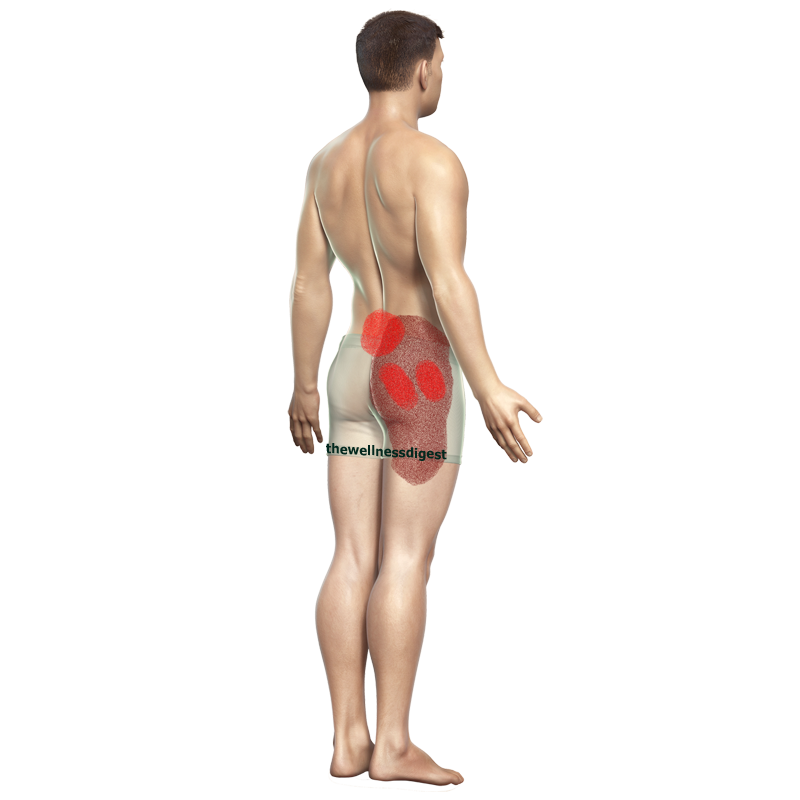
Why Do Trigger Points in Your Gluteus Maximus Cause Thigh Pain?
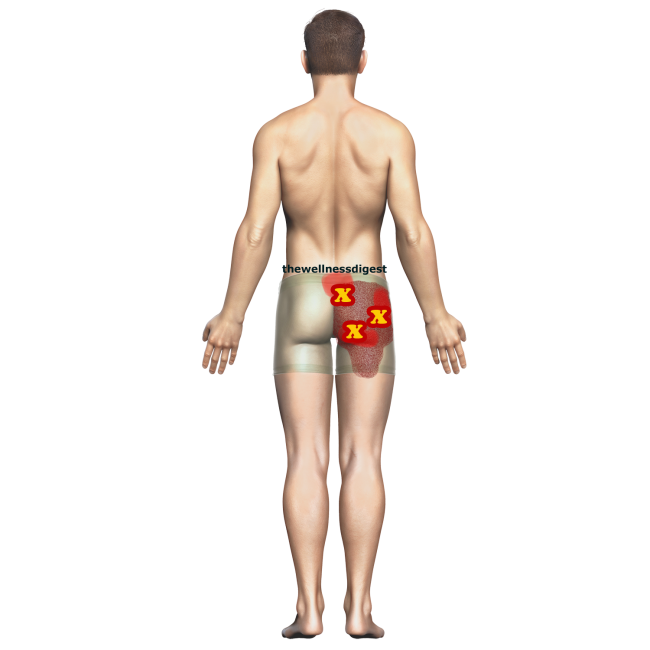
The glute max can develop trigger point anywhere in the muscle.
The most common locations are shown here.
Trigger points are tight, irritated spots in the muscle that can cause pain locally or in other areas. Pressing on it is painful, and you may feel pain in other areas of your body.
The gluteus maximus can develop trigger points throughout its large surface area, each referring pain in slightly different patterns.
The gluteus maximus typically develops trigger points in several areas:
- Upper trigger points - Refer pain to the sacrum, tailbone, and low back
- Lower trigger points - Refer pain to the lower buttock area and down the back of the thigh
- Lateral (located to the side) trigger points - Refer pain to the hip joint area and outer thigh
Why Referred Pain Happens
When trigger points form in a muscle, they create localized areas of tightened tissue that remain even when the rest of the muscle relaxes. This constant stress irritates nearby nerve pathways, sending pain signals that your brain interprets as coming from areas distant from the actual trigger point.
The gluteus maximus trigger points refer pain in predictable patterns, primarily to the low back, sacrum, tailbone, and buttock. This consistency helps with diagnosis; if pressing on tender spots in your buttock reproduces your pain pattern, you've likely found active trigger points.
Satellite Trigger Points
When your gluteus maximus has active trigger points, surrounding muscles often develop their own trigger points from the additional work they do. Your body tries to spare the painful muscle by overworking nearby structures. These "satellite" trigger points can persist even after you've treated the original gluteus maximus trigger points.
If you've addressed your gluteus maximus pain but still have lingering symptoms, check for active trigger points in these muscles:
How To Treat Gluteus Maximus Pain
Your approach depends on how long you've had the pain. Here's what works for each stage.
Sudden Pain (0-2 Weeks)
Goal: Reduce inflammation and calm muscle spasm
- Ice It - Apply ice for 15-20 minutes every 2-3 hours during the first 2-3 days. Never put ice directly on the skin; have a barrier, like a thin towel, in place to protect from ice burn. (Ice pack recommendation)
Modify Your Activities
- Limit stair climbing - use elevators or go up one step at a time if you must use stairs
- Avoid low chairs and couches - sit on higher surfaces that require less hip extension to stand up
- Use your arms to push yourself up from sitting - reduce the demand on your glutes temporarily
- Avoid hills, running, heavy squats, and lunges
- No prolonged standing on hard surfaces
- Don't sit for more than 20 minutes at a time without standing
Easy Movements
- Find Relief Positions - Lie on your stomach with a pillow under your hips to take tension off the muscle..
- Take short 5-10 minute walks on flat surfaces every few hours to prevent stiffness. Walk slowly and avoid inclines.
- Shift your weight side to side when standing to avoid keeping the muscle tightened continuously
- Don't stretch aggressively during this phase; it can make inflammation worse, increasing your pain
Once the swelling has gone down and the pain has eased, proceed to the steps below.
Start here if your pain has been ongoing for 2 or more weeks
For Ongoing Pain
Goal: Increase flexibility and address underlying causes
- Heat It - Apply heat for 15-20 minutes before stretching. Use a heating pad, warm bath, or heat wrap. For chronic pain, heat works better than ice. (Heating pad recommendation)
- Do glute stretches throughout the day. Move slowly and never force the stretch; you should feel a mild pull, not pain. Always stretch after applying heat or after a short warm-up walk.
- Strengthen Your Glutes - Weak glutes are what keep the pain coming back, so rebuilding strength is essential. Start light, progress slowly, and back off if pain increases. Stronger glutes handle daily demands without breaking down
- Strengthen Your Core - Weak abdominal and low back muscles force your glutes to overwork.
- Address what's driving it. Sitting habits, worn footwear, and long stretches without movement all feed the problem. Small daily changes matter as much as the stretching and strengthening.
If movement is still stiff and the pain is not decreasing, it is time to check for trigger points.
For Trigger Point Pain
Goal: Release the tight knots in the muscle
- Massage Balls - Sit on a tennis ball or lacrosse ball positioned on the tender spot in your buttock. Start sitting on a soft surface (bed or couch) until you build tolerance, then progress to harder surfaces. Let your body weight provide the pressure. Hold for 10-30 seconds while breathing deeply. The pain should ease during this time. Repeat 2-3 times. Do this 1-2 times daily.
- Theracane - lets you apply pressure without awkward positioning. Position the tool on the tender spot and gently push in. Hold 30-60 seconds, rest, repeat 2-3 times. This tool is excellent for all areas of the body. Recommended for those with mobility and balance issues.
The Tool That Helps You Treat Low Back/Hip Pain
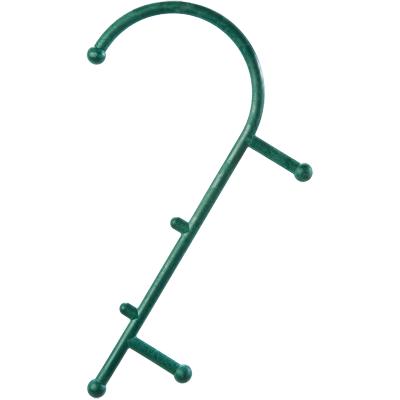
The Theracane is a tool I recommend for those interested in treating muscle pain. It can be used on most areas of the body with pinpoint accuracy. It allows you to reach all muscles easily without twisting into awkward positions or getting on the floor.
Highly recommended for anyone with mobility or balance issues.
A detailed instruction manual guides you through how to use the tool on various muscles.
When Will I Feel Better?
Immediate Relief (Days 1-3)
Most people notice a drop in sharp, nagging pain within the first few days of consistent self-treatment. The constant ache in your buttock typically eases first. Standing from sitting becomes less painful. These are good signs, but it doesn’t mean the muscle is fully healed.
Keep doing what’s working. Don’t quit early.
Reduction In Pain And Increased Mobility (Week 1-2)
You should notice improved ability to climb stairs, less pain when standing from sitting, and reduced buttock discomfort during prolonged sitting. If trigger points are present, they'll still be tender to pressure, but the referred pain to your low back and sacrum should be decreasing.
Significant Progress (Week 3-6)
In most cases, gluteus maximus pain resolves within this timeframe with consistent self-treatment. If you're not seeing steady improvement by week 4, consult a professional.
Long-Term Recovery (6-12 weeks)
Chronic or severe cases may take longer, especially if you have significant weakness or long-standing trigger points. Gradual, steady improvement is normal. Small setbacks during this period don't mean you're back to square one.
When to Worry: If your pain worsens despite treatment, or you see no improvement after 2 weeks of consistent daily treatment, see a healthcare provider.
How To Prevent Gluteus Maximus Pain From Returning
Preventing glute max pain is easier than treating it. Here's how to protect yourself:
Keep Your Glutes Strong
The most important prevention strategy is maintaining glute strength. Weak glutes from prolonged sitting are the primary cause of recurring pain.
- Perform glute-strengthening exercises 2-3 times weekly. Work both sides evenly. Don't stop when you are pain-free; keep it up. Strong glutes keep the pain away.
- Add core strengthening exercises. A strong midsection takes some of the workload off your back and supports your lower back.
Move Often and Sit Less
- Stand up and walk for 2-3 minutes every 30-45 minutes when sitting for work.
- Use a standing desk for part of your workday if possible
- Don't sit in soft furniture for extended periods
- When you do sit, use a chair height that makes standing up easier (knees at or slightly below hip level).
- Avoid crossing your legs or tucking one leg under while sitting
- Take walking breaks during long drives
- Take the stairs regularly to maintain your glute strength, but build up gradually. (Do this only after the pain is gone.)
Progress Gradually
- Increase exercise intensity slowly, no more than 10% per week
- Allow 48 hours between workouts that heavily stress your glutes (squats, deadlifts, hill running).
- Back off at the first sign of pain. Pushing through glute soreness leads to trigger points.
- Don't start a new exercise program at maximum intensity
Warm Up Properly
- Spend 5-10 minutes doing warm-up movements before exercise: leg swings, walking lunges, bodyweight squats, hip circles.
- Walk on flat ground for 5 minutes before tackling hills or stairs.
- Start stair climbing within your tolerable range
- Begin hill walking on lower inclines before progressing to steeper grades
- Save static stretching for after your workout when muscles are warm.
Use Proper Mechanics
- When standing up from a chair: scoot to the edge, lean forward slightly, and push through your heels, not your toes.
- When lifting from the ground: use your legs to stand, squeezing your glutes at the top rather than arching your back.
- On stairs: use the handrail on the first few steps if you feel weak, and engage your glutes intentionally with each step up.
Mix It Up
- Cross-train to avoid repetitive strain. If you run hills, add flat cycling or swimming to your routine. If you climb stairs daily, add yoga or Pilates for variety.
- Variety prevents overuse while maintaining overall fitness.
Address Underlying Issues
- If you have recurring problems, consider evaluation for leg length discrepancy, foot problems, or pelvic alignment issues.
- Flat feet or improper footwear can alter your gait and overload one glute.
- Previous hip, knee, or ankle injuries may create compensation patterns that chronically stress your gluteus maximus.
The Bottom Line
The best prevention is staying active and keeping your glutes strong. Prolonged sitting weakens them; regular movement and targeted strengthening protect them. Don't wait until pain returns to restart your exercises.
Frequently Asked Questions
Q: How long does it take for gluteus maximus pain to heal?
A: It depends on the cause and severity. Acute pain from overexertion typically improves within 2-3 weeks with proper rest and treatment. Chronic trigger point pain often takes 4-8 weeks of consistent stretching, strengthening, and trigger point work to resolve. If your pain stems from significant weakness (common after prolonged sitting), expect 8-12 weeks to rebuild strength and eliminate symptoms. The key is consistency; people who do their exercises 3-4 times weekly recover faster than those who skip days. If you see no improvement after 4 weeks of appropriate self-care, seek professional evaluation.
Q: How do I know if it's my gluteus maximus or my SI joint?
A: Both cause pain in the same general area, the base of your spine and upper buttock, making them easy to confuse. Gluteus maximus pain typically responds well to massage, stretching, and strengthening exercises. You can often reproduce the pain by pressing directly into the muscle tissue. SI joint pain involves the joint itself and may feel like a sharp, stabbing sensation right at the joint line (where your spine meets your pelvis). SI joint problems often require manipulation or joint-specific treatment and don't improve much with muscle work alone. Many people have both issues simultaneously since a tight glute can pull on the SI joint. If muscle-focused treatments don't help after 2-3 weeks, get evaluated for SI joint involvement.
Q: Should I continue exercising if I have glute max pain?
A: Yes, for mild to moderate pain, but cut intensity in half and avoid activities that worsen symptoms. Complete rest causes stiffness and weakness. For severe pain, rest 2-3 days before resuming. Stop if pain increases during or after exercise.
Q: Does sitting make gluteus maximus pain worse or better?
A: Sitting has a complicated relationship with gluteus maximus pain. During acute inflammation (first few days), sitting provides temporary relief because the muscle isn't working. However, prolonged sitting is terrible for your glutes in the long term; it significantly weakens them, setting you up for recurring problems. When you do sit, avoid low chairs and soft couches that make it hard to stand up. Choose firm, higher seats. Don't sit for more than 30-45 minutes without standing and walking for a few minutes. The paradox is this: sitting feels better in the moment, but weakens the muscle and perpetuates the problem. Standing, walking, and gentle movement hurt more initially but promote healing and prevent recurrence.
Product Recommendations
Below is a list of the products I recommend for hip pain. I only recommend products I use personally and have used as a therapist. You don't need every product, only the ones that you will use.
Lacrosse Massage Balls - This set of massage balls is the right size and density for glute max treatment. I keep one in my nightstand, living room, and truck for quick treatments on various muscles.
Theracane - This is a tool I think should be in every household. You can comfortably reach all areas of the body that need trigger point treatment. Highly recommended for people who have balance and mobility issues. You can use the cane to apply pressure to the muscles while standing or sitting. Detailed pamphlet included.
Lumbar Support - Whether you are sitting at a desk, dealing with long commutes, or chilling in a recliner watching movies, you will be surprised by how extra support can help reduce pain. I like this brand for its firmness; it supports and does not collapse.
Warm/Cold Gel Packs - This is the brand I used in my practice and still use personally; it is large enough to cover the hips. I recommend getting the 2-pack; use one for cold treatments and the second for warm treatments.
Heating Pad - Heat with added weight. Sore muscles appreciate that combination. This pad gets warm without overheating, and its heavier weight not only feels good but also helps reduce pain.
Note: Pillows are not created equal. Bed pillows flatten quickly, which eliminates the benefit of extra support. The pillows below will provide the support you need to get a good night's rest.
Bolster Pillow - A half-moon bolster works exceptionally well if you sleep on your back. Placed under your knees, the added elevation relieves the pressure on your back and hips, reducing your pain.
Full-Length Knee Pillow - A full-body pillow is often too long to comfortably use between your legs. This pillow was specifically designed for side sleepers to support the legs and keep the spine, hips, and pelvis aligned while you sleep.
The Book I Recommend Most for Trigger Point Pain
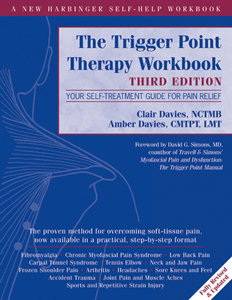
Learn how to find the root cause of pain and treat it at home.
- Clear diagnostic tools and treatment protocols
- Detailed pain pattern diagrams for every muscle
- Self-massage techniques that actually work
- Comprehensive coverage of chronic pain conditions
As an Amazon Associate, I earn from qualifying purchases.
If treating your gluteus maximus doesn't resolve your symptoms, these muscles may also be involved:


Conditions That Affect And Are Affected By The Gluteus Maximus Muscle
Areas of Pain
Trusted Sources for Muscle Anatomy and Pain Patterns
These are the top 6 sources I use to verify muscle function, pain referral patterns, treatment techniques, and anatomical structure. My experience as a massage therapist informs the interpretation and practical application of this information.
- Travell, J. G., & Simons, D. G. (1983). Myofascial Pain and Dysfunction: The Trigger Point Manual, Volume 1 – The Upper Extremities. Williams & Wilkins.
- Travell, J. G., & Simons, D. G. (1992). Myofascial Pain and Dysfunction: The Trigger Point Manual, Volume 2 – The Lower Extremities. Williams & Wilkins.
- Davies, C., & Davies, A. (2013). The Trigger Point Therapy Workbook: Your Self-Treatment Guide for Pain Relief (3rd ed.). New Harbinger Publications.
- Muscolino, J. E. (2016). Kinesiology: The Skeletal System and Muscle Function (3rd ed.). Mosby.
- Clay, J. H., Allen, L., & Pounds, D. (2015). Basic Clinical Massage Therapy: Integrating Anatomy and Treatment (3rd ed.). Lippincott Williams & Wilkins.
- Dalton, E. (n.d.). (2014). Myoskeletal Alignment Techniques. Freedom From Pain